If you've been following economic news lately, tariffs have been impossible to ignore. From headlines about trade disputes to grocery prices and car costs, the ripple effects of sweeping import tariffs are showing up everywhere — including, significantly, in the Maryland housing market.
Here's what many buyers, sellers, and investors don't realize: tariffs on construction materials like lumber, steel, copper, and aluminum are directly suppressing new home construction across the country. Fewer new homes built means tighter inventory. Tighter inventory means more competition for existing homes. More competition means upward pressure on prices — even in a market where buyers are already stretched thin by elevated mortgage rates.
If you're thinking about buying, selling, or investing in Maryland real estate in 2026, understanding what tariffs are doing to the housing supply is one of the most important things you can do.

How Tariffs on Building Materials Are Squeezing the Housing Market
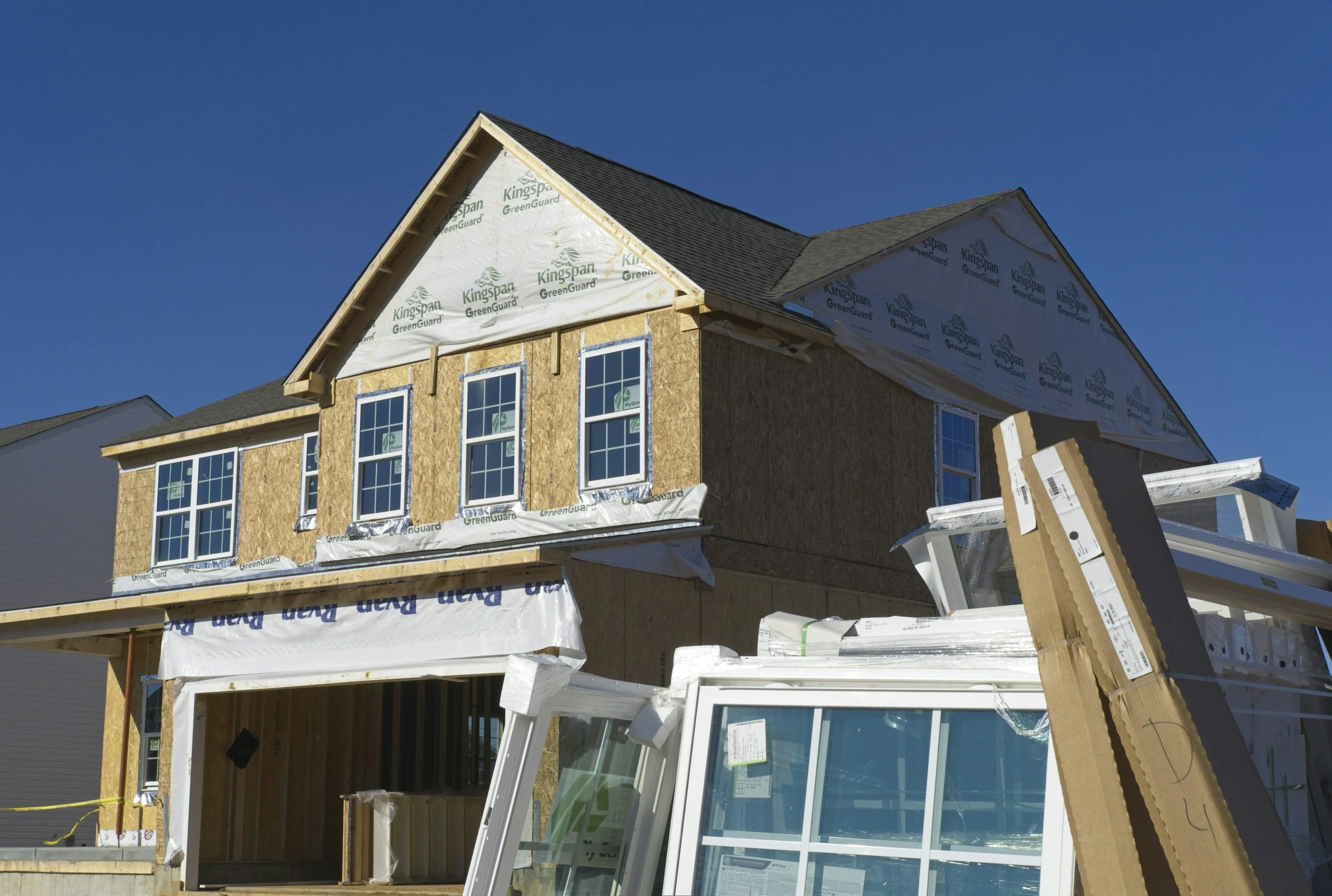
To understand what's happening in Maryland, you first need to understand the supply chain that creates homes. Building a single-family home requires lumber for framing, steel for structural elements and appliances, copper for wiring and plumbing, aluminum for windows and siding, and concrete — all of which rely on domestic production and global imports.
Tariffs imposed on Canadian lumber — which supplies roughly 25–30% of the lumber used in U.S. home construction — have significantly raised the per-board-foot cost builders pay. Similar tariffs on steel and aluminum imports have driven up the cost of structural components, HVAC systems, and finishes. When the cost of raw materials climbs, builders face a choice: raise home prices to maintain margins, or slow down construction until costs stabilize. Many have done both.
The National Association of Home Builders (NAHB) has estimated that tariffs on lumber alone can add $10,000–$15,000 or more to the cost of a new single-family home, depending on size and materials mix. The practical result: builders are pulling back on lower-margin starter homes, construction timelines are stretching out, and the new home inventory that first-time buyers need most is getting scarcer and more expensive.

What's Happening to New Home Construction in Maryland
Maryland's housing market was already navigating tight inventory before tariff pressures intensified. The Baltimore metro area, along with fast-growing suburban counties like Howard, Harford, Anne Arundel, and Frederick, has seen consistent demand from buyers priced out of D.C. or drawn in by Maryland's strong job market.
New construction permit filings across the Baltimore–Columbia–Towson metropolitan area have been slower than needed to close the housing gap. Builders who would normally break ground on affordable townhome communities in Harford or Carroll County are doing the math differently now — and many projects are either delayed, scaled back, or priced at a point where first-time buyers simply can't compete.
The communities most affected tend to be in the mid-market range — the $350,000–$550,000 new construction segment that serves young families and move-up buyers. For buyers hoping to find a brand-new home in Columbia, Ellicott City, Bel Air, or the suburbs around Frederick, the combination of higher new construction prices and reduced availability means the existing home market is where most competition is playing out in 2026.
How Tariff-Driven Costs Are Affecting Existing Home Prices
When new construction slows and gets more expensive, buyers don't disappear — they redirect their demand to existing homes. That increased competition for a limited pool of resale inventory puts upward pressure on prices, even without any change in the underlying economy.
In markets like Lutherville-Timonium, Perry Hall, Pasadena, and Catonsville, well-priced existing homes are continuing to attract multiple offers. Sellers who price correctly are not sitting on the market — they're moving.
What this means in practical terms: the floor under Maryland home values is being held up by supply constraint, not just by demand strength. Even if buyer demand were to soften slightly, the supply side is so constrained that significant price drops are unlikely in most submarkets. Some buyers have also noticed that new construction homes often carry a "tariff surcharge" line item that builders are increasingly transparent about — normalizing higher pricing in the new home segment and indirectly anchoring expectations for resale homes in the same neighborhoods.

What Maryland Home Buyers Should Do Right Now
Given everything above, here's what the current environment means for buyers who are actively looking — or who have been on the fence.
Stop waiting for prices to drop significantly. With inventory constrained by construction slowdowns and continued steady demand in Maryland's job-rich market, the supply conditions that would trigger a major price correction simply aren't in place.
Get pre-approved and know your number. In a market where well-priced homes still move quickly, being pre-approved isn't just helpful — it's the price of entry to a competitive offer situation.
Consider existing homes over new construction — for now. Given the tariff-inflated cost of new homes, well-maintained existing homes often represent better value per square foot.
Look in secondary markets. Communities like Mount Airy, New Market, Jarrettsville, Fallston, and North Potomac offer strong school systems and quality of life at more accessible price points.
Work with an experienced local agent who understands both the big picture and the micro-level inventory in your target neighborhoods.

What Maryland Home Sellers Should Know Right Now
If you've been thinking about selling, the current environment is working in your favor in some important ways.
Low inventory is your friend as a seller. Because new construction is constrained and buyer demand for existing homes remains solid, well-priced properties in desirable Maryland communities are not sitting idle.
Buyers are motivated and qualified. The buyers who are actively making offers in today's market have already done the work — they're pre-approved, they've been searching for a while, and they know what they want.
Condition and pricing still matter. Low inventory doesn't mean you can ignore presentation. Homes that are well-staged, priced at or just below market value, and professionally photographed still outperform homes that are overpriced or need significant work.
Plan your next move before you list. Work with your agent to map out your next purchase before you put the "For Sale" sign in the yard.
Smart Moves for Real Estate Investors in a Tariff Environment
For real estate investors, tariff-driven construction cost increases create specific conditions worth understanding.
Rental demand stays strong when buyers can't buy. When first-time buyers are priced out or choosing to wait, they rent. That sustained rental demand supports occupancy rates and rental income across Maryland's strongest rental markets.
Renovation budgets require updated cost modeling. If you're buying distressed properties to renovate, your cost of materials — from roofing to HVAC to windows — has gone up. Work with contractors who can give you current material pricing before you close on an investment property.
Maryland's proximity to federal employment is a stabilizing force. With Fort Meade, NSA, Aberdeen Proving Ground, Joint Base Andrews, and the Naval Academy all within the state, Maryland's rental demand has a floor that many markets don't. Government employment is largely recession-resistant, and federal
employees are concentrated in some of Maryland's strongest real estate submarkets.
Frequently Asked Questions About Tariffs and Maryland Home Prices
How much have tariffs increased the cost of building a new home?
According to the National Association of Home Builders, tariffs on lumber and other materials can add $10,000–$15,000 or more to the cost of a single-family home.
Will tariffs cause home prices to drop in Maryland?
Tariffs are more likely to keep prices elevated than to cause them to drop. By raising the cost of new construction, tariffs reduce housing supply, which supports or increases prices for existing homes.
Are new homes in Maryland more expensive because of tariffs?
Yes. Builders are passing higher material costs on to buyers through higher list prices or reduced incentives.
Is now a good time to buy a home in Maryland despite higher prices?
For buyers who are financially ready, many housing experts argue that waiting is riskier than acting. Tariff-constrained supply is not a short-term problem, and prices in Maryland's most sought-after markets have shown resilience.
What parts of Maryland are most affected by the construction slowdown?
The suburban growth corridors of Howard, Harford, Anne Arundel, Frederick, and Carroll Counties are feeling the impact most acutely.
What should I do if I'm a seller in Maryland right now?
Now is generally a good time to sell in well-located Maryland communities. Price your home correctly, present it well, and work with an experienced agent to maximize your outcome.
Are tariffs permanent? Could the housing market change if they're removed?
Tariff policy can change with political and trade conditions. However, even if tariffs were reduced or removed, the construction industry would take time to ramp up. The housing market wouldn't flip overnight.
How do tariffs affect mortgage rates?
Tariffs don't directly set mortgage rates, but they can contribute to inflation, which influences Federal Reserve policy and potentially keeps mortgage rates elevated longer.
Is it harder to find a starter home in Maryland because of tariffs?
Yes, in most markets. Builders have pulled back on lower-price-point homes where tariff-driven cost increases eat the most margin.
What's the best strategy for first-time buyers in Maryland in 2026?
Get pre-approved early, be flexible on neighborhood or property type, and work closely with a local agent who knows where inventory tends to emerge before hitting major listing sites.
Why Work With Michael Frank at Frank Oliver Collective at eXp Realty?
Navigating a housing market shaped by macroeconomic forces — tariffs, rate movements, inventory constraints — takes more than a real estate license. It takes deep local knowledge, strategic thinking, and a team that has seen enough market cycles to know where real opportunity lives.
Michael Frank leads Frank Oliver Collective at eXp Realty, a Maryland real estate team that has helped 500+ families buy, sell, and invest across the state. With 15+ years of real estate experience, GRI® designation, and more than 100 transactions per year, Michael Frank and the Frank Oliver Collective team bring expertise and market exposure that translates into better outcomes for clients.
Frank Oliver Collective serves buyers and sellers across Baltimore, Harford, Anne Arundel, Howard, Prince George's, Montgomery, Carroll, and Frederick Counties — including communities like Annapolis, Bel Air, Catonsville, Columbia, Ellicott City, Fallston, Frederick, Lutherville-Timonium, Perry Hall, Pasadena, North Bethesda, Potomac, and dozens more.
With 200+ Google and Zillow reviews, Frank Oliver Collective's reputation is built on real results and real relationships.
Contact Michael Frank at Frank Oliver Collective at eXp Realty: Website: frankoliverco.com | Email: liv@frankoliverco.com | Phone: (443) 222-9612
The Bottom Line
Tariffs are not an abstract economic policy story — they're reshaping the physical supply of homes being built and bought across Maryland right now. Higher construction costs mean fewer new homes. Fewer new homes mean more competition for existing inventory. More competition means prices stay firm, and the window to act wisely stays open only to those who are prepared.
Whether you're a buyer trying to understand if now is the right time, a seller wondering if the market will support your goals, or an investor reassessing your strategy, the single best move is to work with a local expert who knows what's actually happening in your target market.
Michael Frank at Frank Oliver Collective at eXp Realty is here to help you cut through the noise, understand the local picture, and make moves that make sense. Visit frankoliverco.com or call (443) 222-9612 to get started.