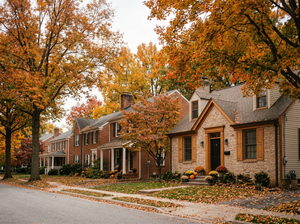
The Maryland housing market shifts every fall, and 2026 is no exception. As summer's crowded open houses give way to a quieter, more deliberate market, both buyers and sellers face a different set of rules than they did in June.
If you're wondering whether now is the right time to list your home, make an offer, or simply wait until spring, understanding how the fall Maryland housing market actually behaves is the first step.
This guide breaks down what's really happening this season — from mortgage rates and inventory to negotiating leverage and Maryland-specific timing — so you can make a confident, well-informed decision instead of guessing based on last season's headlines.
Whether you're selling a rowhome in Baltimore, buying your first place in Howard County, or timing a move around a military PCS, here's what the fall market means for you.
Why the Fall Market Behaves Differently Than Summer

Every year, the rhythm of the housing market changes as the seasons turn, and fall is one of the most misunderstood stretches on the calendar. Summer gets all the attention — school-driven moves, long daylight hours for showings, and a flood of new listings — but fall has its own distinct character that savvy buyers and sellers can use to their advantage.
By September and October, the market naturally thins out. Casual lookers who were "just browsing" in June have mostly dropped off, leaving a pool of buyers who are motivated by real deadlines: a lease expiring, a job relocation, or a desire to be settled before the holidays. Sellers who list in fall tend to be similarly serious — they're not testing the waters, they're ready to move.
What this means in practice:
• Fewer multiple-offer bidding wars than peak summer months
• More room for negotiation on price, closing costs, and repairs
• Buyers face less competition per listing, even if overall inventory is lower
• Sellers benefit from a smaller but more committed buyer pool
The trade-off is straightforward: fall usually brings fewer total transactions than summer, but the ones that happen tend to be smoother, with buyers and sellers who are genuinely ready to close.
Where Mortgage Rates Stand and What It Means for Affordability

Mortgage rates remain one of the biggest variables shaping affordability heading into the fall and winter months. Rates have been volatile over the past several years, moving in response to inflation data, Federal Reserve policy decisions, and broader economic conditions — and that volatility has trained buyers to pay close attention rather than assume rates will stay flat.
For buyers, even small rate movements can meaningfully change a monthly payment. A shift of half a percentage point on a typical Maryland home price can mean a difference of well over a hundred dollars a month, which adds up quickly over the life of a loan. This is why working with a knowledgeable lender who can walk through rate locks, buydowns, and adjustable-rate options is just as important as finding the right home.
A few things buyers should keep in mind this fall:
• Ask your lender about temporary or permanent rate buydowns, which some sellers are willing to help fund as a concession
• Get pre-approved (not just pre-qualified) so you can move quickly when the right home appears
• Compare rate quotes from more than one lender — even small differences compound over a 30-year term
For sellers, the mortgage rate environment matters too. It directly shapes how many buyers can comfortably afford your home at your asking price, which is part of why realistic, market-informed pricing matters more than ever this season.
[EXTERNAL LINK: Freddie Mac Primary Mortgage Market Survey]
Inventory and Days on Market: What Sellers Should Expect

One of the clearest fall patterns is a natural slowdown in new listings. Fewer homes come on the market compared to the spring surge, which can work in a seller's favor — less competition for buyer attention — but it also means the homes that are overpriced or poorly presented tend to stand out for the wrong reasons.
Homes that linger on the market for weeks without an offer often send a signal to buyers that something is off, even if the reason is simply an ambitious asking price. In a fall market with a smaller, more discerning buyer pool, that signal gets amplified.
Sellers who price realistically from day one, rather than testing a high number and planning to "adjust later," consistently see better outcomes — both in final sale price and in time on market.
Common reasons homes stall in the fall market:
• Pricing based on a spring comp that no longer reflects current buyer sentiment
• Skipping pre-listing repairs or staging that would help the home compete
• Limited showing availability during shorter daylight hours
• Holding out for a summer-level bidding war that simply isn't happening this season
Sellers who work with an agent to set an honest, data-backed price — and who stay flexible on showing times as daylight shrinks — put themselves in the strongest position to sell efficiently rather than chase the market downward with repeated price cuts.
Buyer Advantages in the Fall Market

If you've been priced out or out-bid during the spring and summer rush, fall is worth a serious look. The dynamics that make fall harder for sellers are the same ones that create real opportunity for buyers.
With fewer competing offers, buyers have more room to negotiate — not just on price, but on contingencies, closing timelines, and who pays for what at closing. Sellers who have had a home sitting for a while are often more open to covering closing costs, making repairs, or accepting an offer with an inspection contingency they might have waved off in June.
Fall buyer opportunities to watch for:
• Homes that have been on the market 45+ days, where sellers may be more motivated
• New construction communities offering incentives to hit year-end sales targets
• Less pressure to waive inspections or appraisal contingencies just to compete
• More negotiating room on rate buydowns or seller-paid points
That said, fall isn't a guarantee of a discount on every home — well-priced, well-presented properties in desirable Maryland neighborhoods can still move quickly.
The advantage goes to buyers who are prepared, pre-approved, and ready to act decisively when the right property appears, rather than those hoping every listing will be a bargain.
Seller Strategies for a Successful Fall Listing

Selling in the fall requires a slightly different playbook than a spring listing. The core principles of good real estate — pricing, presentation, and marketing — still apply, but the execution needs to account for a smaller buyer pool and shrinking daylight.
Pricing strategy matters more than ever. Rather than starting high and hoping to negotiate down, sellers who price at or near true market value from the start tend to generate more showings and stronger offers in the first two weeks — historically the period when a listing gets the most attention.
Staging and curb appeal also need a seasonal refresh: warm, inviting lighting for shorter days, tasteful autumn touches without overdoing it, and making sure exterior areas are clear of fallen leaves and clutter for photos and showings.
Fall listing checklist for sellers:
• Price to current market conditions, not last season's comps
• Schedule professional photography during optimal daylight hours
• Offer flexible showing times to accommodate shorter days and busier fall schedules
• Consider minor updates (fresh paint, updated lighting, decluttering) that yield strong return relative to cost
• Be prepared to negotiate on closing costs or minor repairs to keep serious buyers engaged
Sellers who treat fall as its own distinct season — rather than a lesser version of summer — tend to have realistic expectations and better outcomes than those who simply wait, frustrated, for offers that mirror what neighbors got in May.
Maryland-Specific Fall Market Dynamics
Local dynamics matter as much as national trends, and Maryland's fall market has some distinct regional patterns worth understanding.
Baltimore City and Baltimore County continue to see steady interest from first-time buyers drawn to relative affordability compared to the DC suburbs, while walkable neighborhoods and rowhome inventory remain a draw for buyers looking for character and value.
In Anne Arundel and Howard counties, proximity to job centers and strong school districts keeps demand relatively resilient even as the broader market cools seasonally.
Maryland's military presence also shapes the fall calendar in a way many other states don't experience. With installations including Fort George G. Meade, the National Security Agency, Aberdeen Proving Ground, Joint Base Andrews, the U.S. Naval Academy in Annapolis, NAS Patuxent River, and NSA Bethesda, permanent change of station (PCS) moves create a steady stream of relocation-driven buyers and sellers that doesn't fully disappear when the leaves turn — a dynamic that's especially relevant for VA loan buyers and sellers working around military timelines.
Maryland fall market takeaways:
• Baltimore City/County: affordability and inventory continue to attract first-time buyers
• Anne Arundel & Howard counties: steady demand tied to job centers and schools
• Military-adjacent communities: PCS-driven activity keeps some segments active year-round
• Montgomery & Prince George's counties: commuter demand remains a factor even as broader activity slows
Buyers and sellers in these markets benefit from working with an agent who tracks hyper-local data, not just statewide averages, since conditions can vary meaningfully from one county — or even one zip code — to the next.
[INTERNAL LINK: link to relevant community page on frankoliverco.com]
Frequently Asked Questions About the Fall Maryland Housing Market
Is fall a good time to buy a house in Maryland?
Yes, for many buyers fall is a strong window. Competition typically drops after the summer rush, giving buyers more negotiating room on price and terms. Serious, motivated sellers are often more willing to work with buyers on closing costs, repairs, or timeline flexibility than they were during peak season.
Is fall a bad time to sell a house?
Not necessarily — it's a different market, not a worse one. Fewer buyers are shopping, but the ones who are tend to be serious and ready to close. Fall sellers who price realistically and present their home well can still sell efficiently, often to buyers eager to move before the holidays.
Will mortgage rates drop before the end of 2026?
Rate direction depends on inflation data and Federal Reserve policy, and it can shift with little notice. Rather than trying to time the market perfectly, buyers are generally better served by getting pre-approved, comparing lenders, and asking about rate buydown options that reduce the impact of today's rate.
How long do homes typically stay on the market in fall?
Days on market often ticks up slightly in fall compared to peak spring and summer months, simply because fewer buyers are actively shopping. Well-priced homes in desirable Maryland neighborhoods still move quickly; overpriced listings tend to sit noticeably longer.
Should I wait until spring to sell my Maryland home?
Not automatically. Waiting means competing with the seasonal wave of spring listings, while a fall listing faces less competition for buyer attention. The right timing depends on your specific home, neighborhood, and personal circumstances — a conversation worth having with a local agent before assuming spring is always better.
Do sellers offer more concessions in the fall?
Often, yes. With a smaller buyer pool, fall sellers — especially those whose homes have sat for a while — are frequently more open to covering closing costs, funding rate buydowns, or handling repair requests to keep a motivated buyer engaged.
What should first-time buyers know about buying in the fall?
First-time buyers can benefit from less competition and more time to make thoughtful decisions without the pressure of a bidding war. It's still important to get fully pre-approved, understand all available down payment assistance programs, and work with an agent who can help evaluate whether a given price is fair for current conditions.
How does military PCS season affect the Maryland market in the fall?
Maryland's concentration of military installations means PCS-driven moves continue into fall and winter in a way that's less pronounced in other states. This keeps certain submarkets — particularly near Fort Meade, Annapolis, and Aberdeen Proving Ground — more active than the broader seasonal slowdown might suggest.
Are there tax benefits to closing on a home before the end of the year?
Potentially, depending on individual circumstances — property tax and mortgage interest deductions can factor into year-end tax planning for some buyers. This varies by situation, so it's worth discussing with a tax professional alongside your real estate agent before making a decision based on tax timing alone.
Is it harder to get a home inspected or appraised during the fall?
Generally no, though shorter daylight hours and holiday schedules in November and December can make coordinating showings, inspections, and appraisals slightly more logistically complex. Building a little extra flexibility into your timeline can help avoid unnecessary stress.
Why Work With Michael Frank at Frank Oliver Collective at eXp Realty?
Navigating a seasonal market shift is exactly where experienced, local guidance makes the difference between a stressful transaction and a smooth one.
Michael Frank at Frank Oliver Collective at eXp Realty leads a team that has helped 500+ families buy and sell homes across Maryland, backed by 15+ years of real estate experience and 300+ verified client reviews across Google, Zillow, Realtor.com, and FastExpert.
The Frank Oliver Collective team brings specialized expertise across the full range of what Maryland buyers and sellers need this fall — first-time homebuyers navigating financing and down payment assistance, growing families planning a move before the school year settles in, veterans and military families timing a transaction around a PCS, investors evaluating opportunity in a cooling market, and homeowners rightsizing for their next chapter.
The team serves Baltimore, Harford, Anne Arundel, Howard, Prince George's, Montgomery, Carroll, and Frederick counties, along with the communities in between.
Whether you're trying to decide if now is the right time to list, want a second opinion on an offer, or simply want to understand what the fall market means for your specific neighborhood, Michael Frank and the Frank Oliver Collective team are ready to help you make a confident, informed decision.
Ready to talk through your fall market options? Reach out to Michael Frank at Frank Oliver Collective at eXp Realty at frankoliverco.com or liv@frankoliverco.com.
Conclusion
The fall Maryland housing market isn't better or worse than summer — it's simply different, and understanding those differences is what separates a confident decision from a guessing game.
Buyers can take advantage of lighter competition and more negotiating room, while sellers who price realistically and present their home well can still move efficiently despite a smaller pool of shoppers.
Local dynamics, from military PCS timing to county-by-county demand, add another layer that's worth understanding before you list or make an offer.
Whatever your fall real estate goals, having an experienced, local guide matters. Michael Frank at Frank Oliver Collective at eXp Realty is ready to help Maryland buyers and sellers navigate this season with confidence — reach out today to talk through your specific situation and next steps.